Sep 28, 2025
How to Choose the Right Fabric: A Complete Guide for Perfect Tailoring
Choosing the right fabric is the foundation of any great garment. Whether you're working with a tailor or planning your next custom piece, understanding fabric properties can make the difference between a garment that looks stunning and one that falls short of expectations.
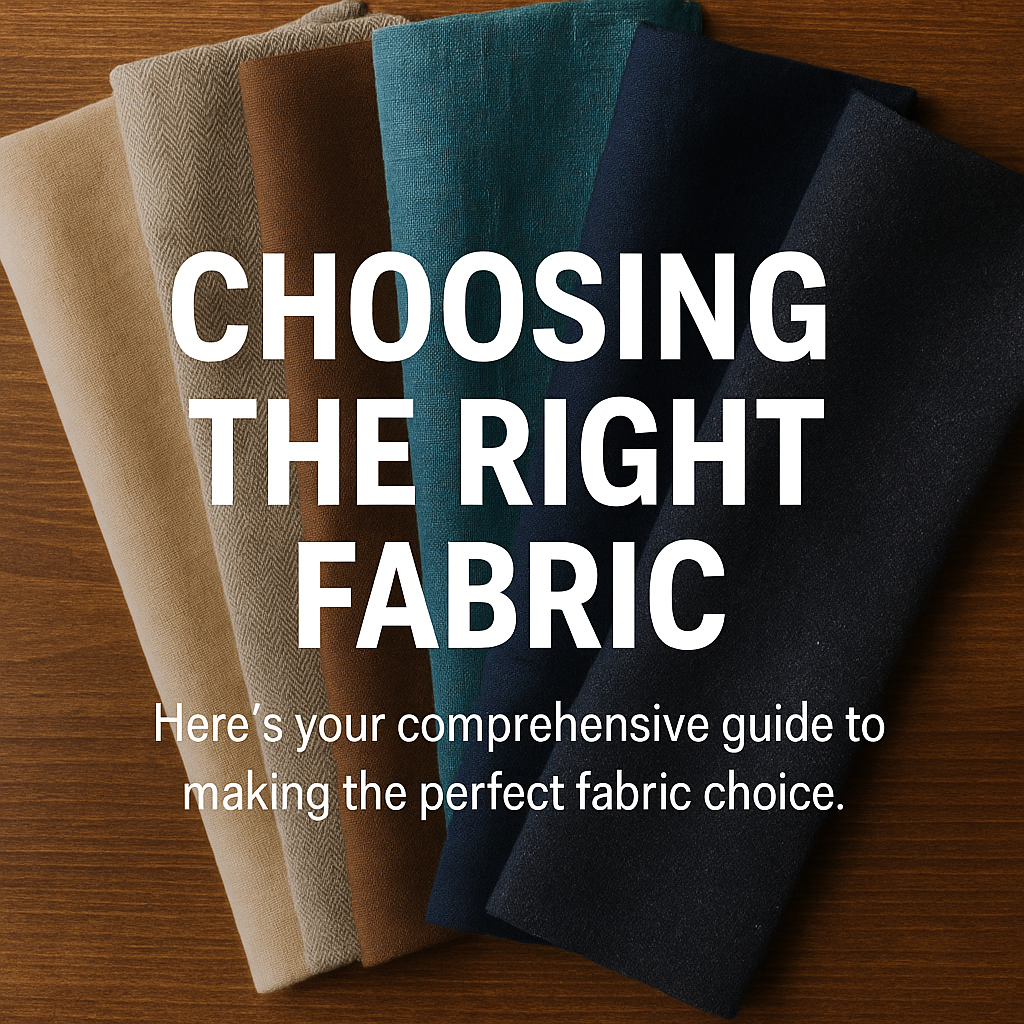
How to Choose the Right Fabric: A Complete Guide for Perfect Tailoring
Choosing the right fabric is the foundation of any great garment. Whether you're working with a tailor or planning your next custom piece, understanding fabric properties can make the difference between a garment that looks stunning and one that falls short of expectations. Here's your comprehensive guide to making the perfect fabric choice.
Understanding Fabric Categories
Natural Fabrics
Cotton - Breathable, comfortable, and versatile. Perfect for casual wear, shirts, and summer garments. Cotton wrinkles easily but is easy to care for and durable.
Wool - The gold standard for tailored garments. Wool drapes beautifully, resists wrinkles, and provides excellent insulation. Ideal for suits, coats, and formal wear.
Silk - Luxurious and elegant with natural sheen. Great for formal occasions, blouses, and linings. Requires special care but offers unmatched sophistication.
Linen - Lightweight and breathable, perfect for hot weather. Natural texture adds casual elegance, though it wrinkles easily.
Synthetic and Blended Fabrics
Polyester blends - Offer durability and wrinkle resistance. Modern blends can provide the look of natural fabrics with easier care.
Wool blends - Combine wool's tailoring properties with added durability and stretch from synthetic fibers.
Key Factors to Consider
1. Purpose and Occasion
* Business suits: Choose fine wool or wool blends in classic colors
* Casual wear: Cotton, linen, or cotton blends work well
* Formal events: Silk, fine wool, or high-quality blends
* Seasonal wear: Light fabrics for summer, heavier weights for winter
2. Climate and Season
Consider your local climate when selecting fabric weight:
* Tropical weights (7-9 oz): Best for hot, humid climates
* Medium weights (10-13 oz): Versatile for most climates year-round
* Heavy weights (14+ oz): Ideal for cold weather and formal occasions
3. Body Type and Fit
* Structured fabrics like wool help create clean lines for formal tailoring
* Draping fabrics like silk work well for flowing designs
* Stretch fabrics can provide comfort and ease of movement
4. Lifestyle and Maintenance
Consider how much time you want to spend on garment care:
* Low maintenance: Synthetic blends, treated cottons
* Moderate care: Pure cotton, wool blends
* High maintenance: Pure silk, fine wool, linen
Fabric Quality Indicators
What to Look For:
* Fiber content: Higher natural fiber content often means better quality
* Thread count: Higher counts generally indicate finer, more durable fabric
* Hand feel: Quality fabrics feel substantial but not heavy
* Drape: Good fabrics hang naturally without stiffness
* Color consistency: Even dyeing with no streaks or variations
Red Flags:
* Harsh chemical smell
* Excessive shedding or pilling
* Uneven texture or weave
* Colors that seem too bright or artificial
Working with Your Tailor
Communication is Key
When discussing fabric with your tailor:
* Explain the garment's intended use
* Share your lifestyle and care preferences
* Discuss your budget range
* Ask about seasonal appropriateness
Trust Their Expertise
Professional tailors can guide you toward fabrics that will:
* Work well with your chosen design
* Suit your body type and measurements
* Meet your durability expectations
* Fit within your budget
Finding the Perfect Match
With TerzyApp, you have access to thousands of skilled tailors and an extensive selection of thousands of fabrics. This means you can browse through countless options to find the perfect combination of tailor expertise and fabric quality that matches your specific needs, style preferences, and budget. The platform makes it easy to compare different tailors' specialties and fabric offerings, ensuring you make the best choice for your custom garment.
Budget Considerations
Investment Pieces
For suits and formal wear, invest in higher-quality fabrics. They'll:
* Last longer with proper care
* Maintain their appearance better
* Provide superior comfort and fit
* Offer better value over time
Cost-Effective Options
For casual or frequently worn items:
* Quality blends can offer great value
* Consider fabric versatility for multiple occasions
* Balance initial cost with expected wear frequency
Seasonal Fabric Guide
Spring/Summer
* Lightweight wools (tropical weights)
* Cotton and cotton blends
* Linen for casual wear
* Light-colored fabrics to reflect heat
Fall/Winter
* Medium to heavy wool
* Wool blends with cashmere
* Darker colors for versatility
* Textured fabrics for visual interest
Making the Final Decision
Before committing to a fabric:
1. Feel the fabric - Does it feel pleasant against your skin?
2. Consider the drape - Does it hang the way you want?
3. Think long-term - Will you still love this fabric in a year?
4. Match your lifestyle - Does the care required fit your routine?
Conclusion
Choosing the right fabric is an art that combines technical knowledge with personal preference. By understanding fabric properties, considering your specific needs, and working closely with your tailor, you can select fabrics that will create garments you'll love wearing for years to come.
Remember, the best fabric choice is one that balances quality, functionality, and personal style while fitting comfortably within your budget. When in doubt, consult with your tailor – their experience and expertise can guide you toward the perfect choice for your next custom garment.
Ready to start your custom tailoring journey? Contact TerzyApp today to connect with skilled tailors who can help you choose the perfect fabric for your next garment.