
AI body measurement, from two phone photographs.
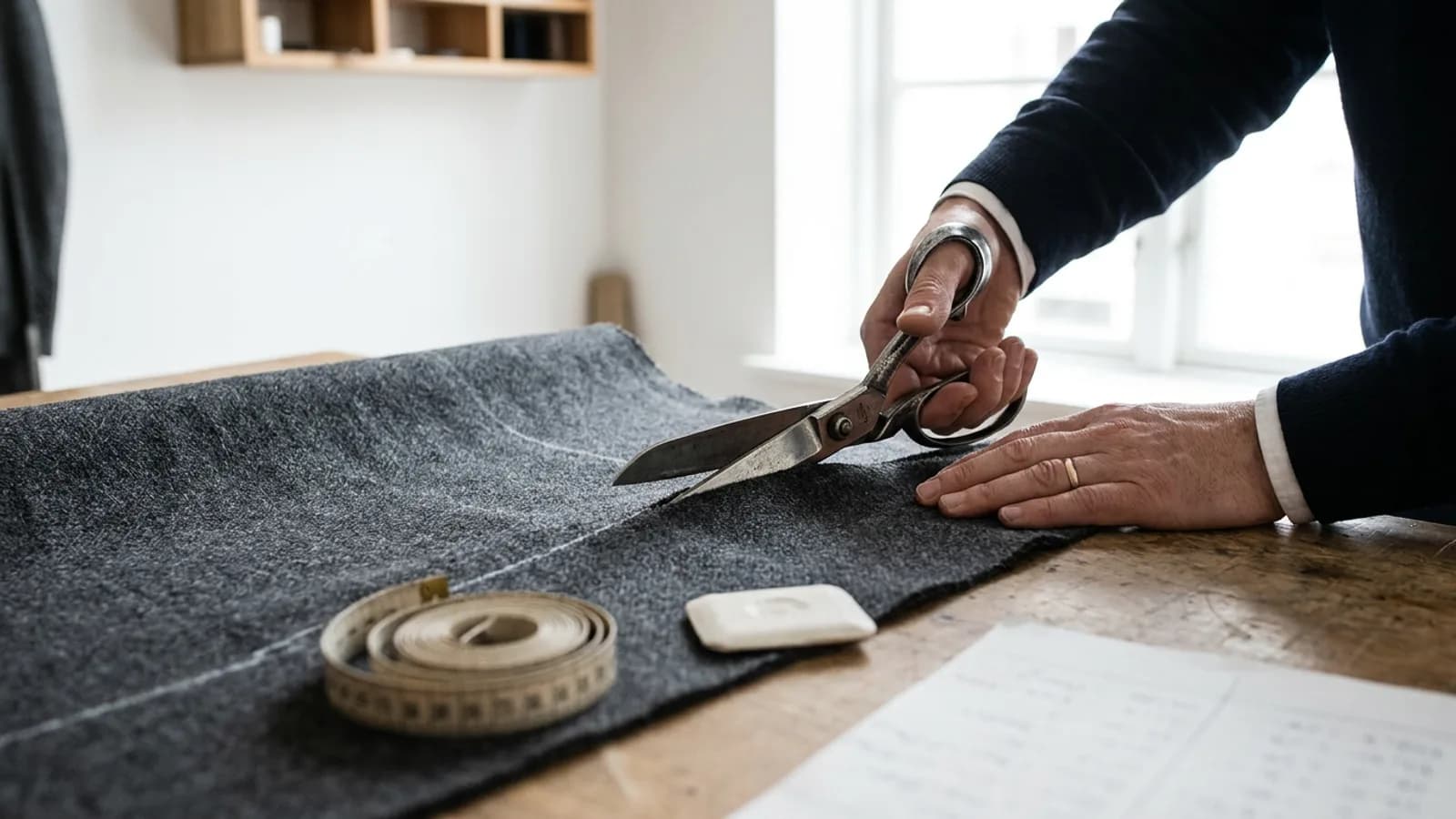
Enter your height, take two photographs with your iPhone, and the measurement engine we built in-house reads the same 32 measurements a master tailor would take with a tape. No appointment, no tape measure, no special hardware.
- tailoring measurements
- 32tailoring measurements
- photographs, front and side
- 2+photographs, front and side
- tape measures, fittings, sensors to buy
- 0tape measures, fittings, sensors to buy
More on how TerzyApp works
How to measure your body with your phone
The whole session takes a few minutes in your own room. Everything that follows the shutter happens without you.
- 01 · Height
Your height sets the scale
A photograph knows proportion, not size. Your height is the one real-world number that turns pixels into centimetres, so you type it once before the camera opens — and it is prefilled every session after that.
- 02 · Frame
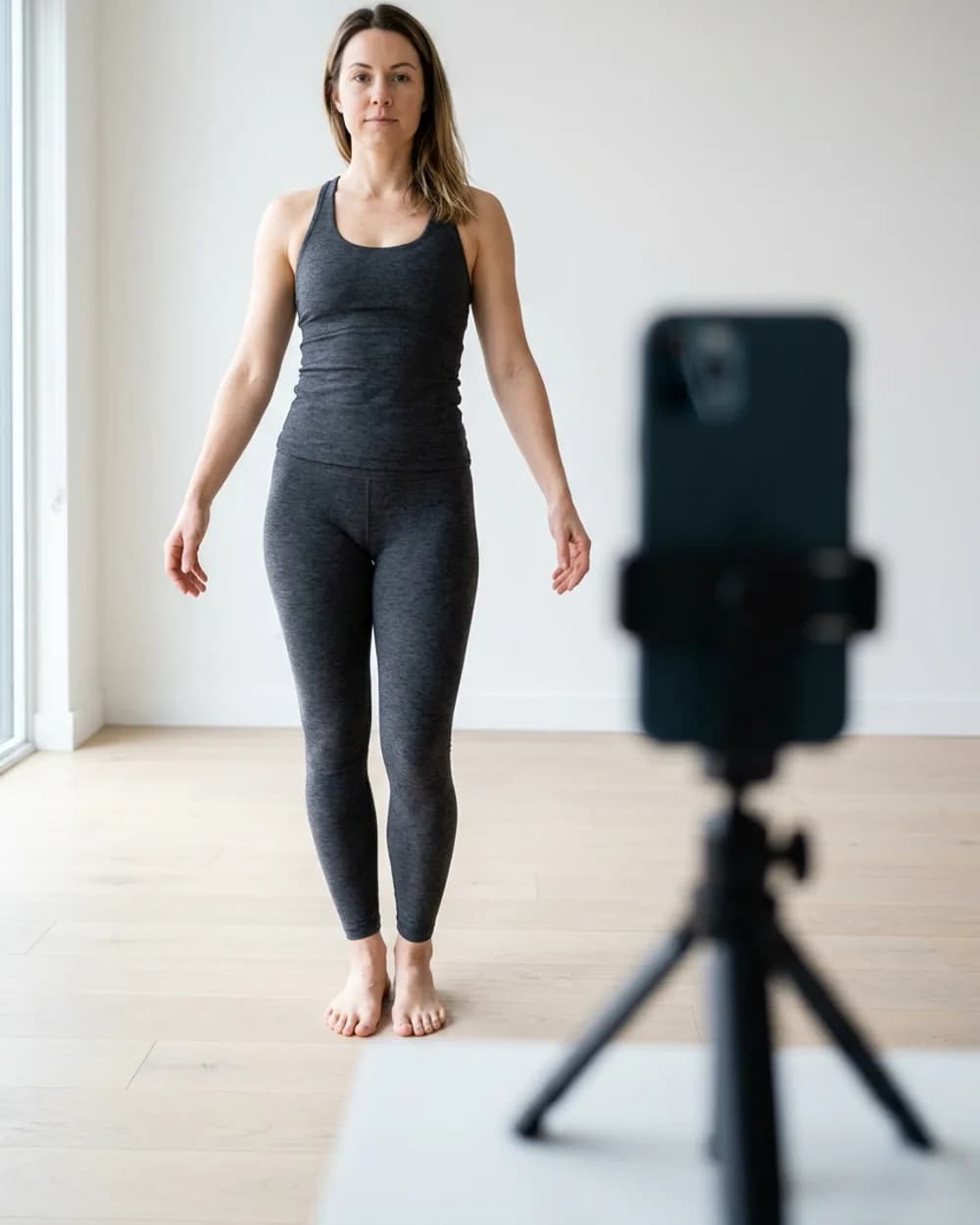
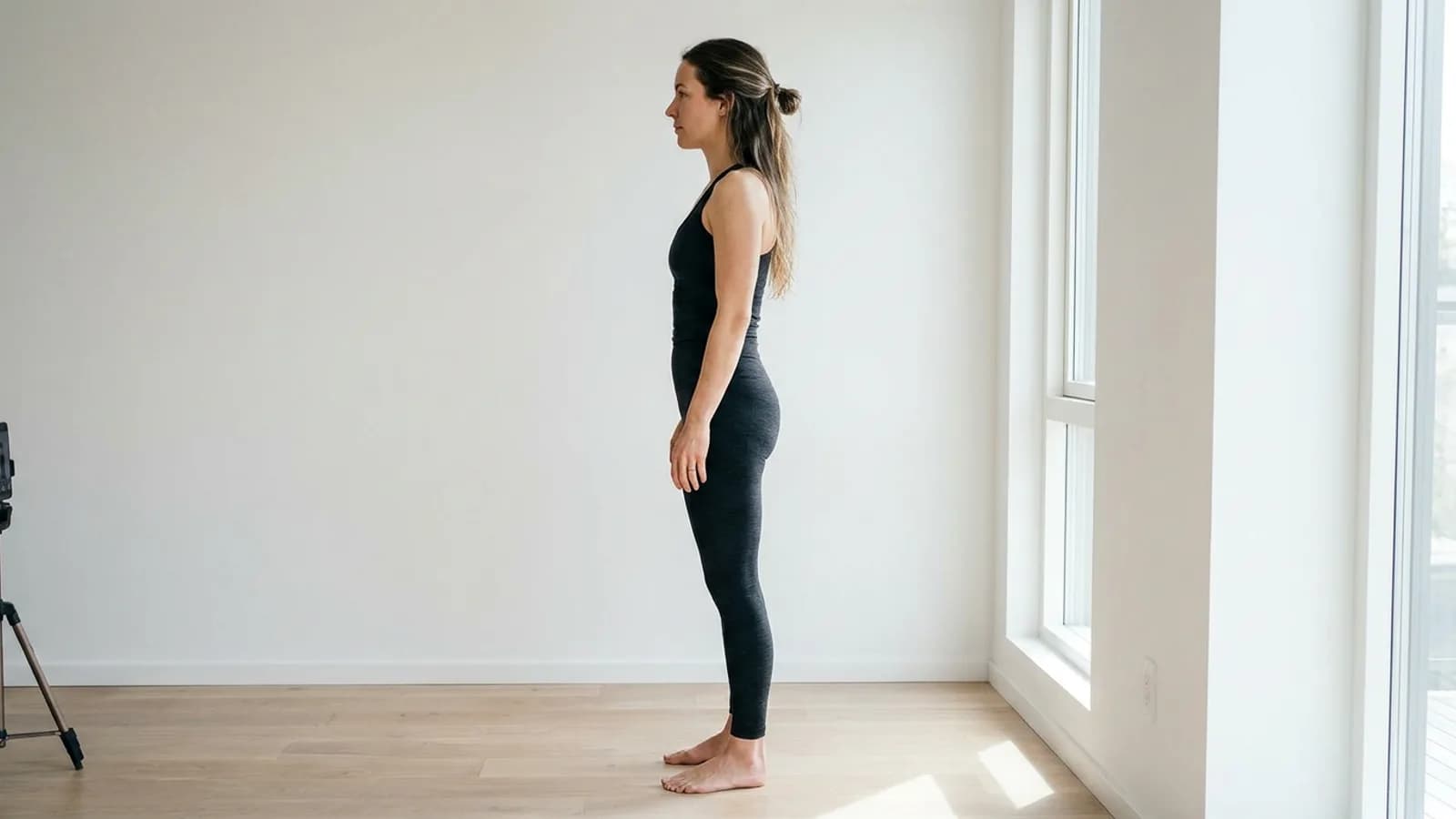
Two photographs, front and side
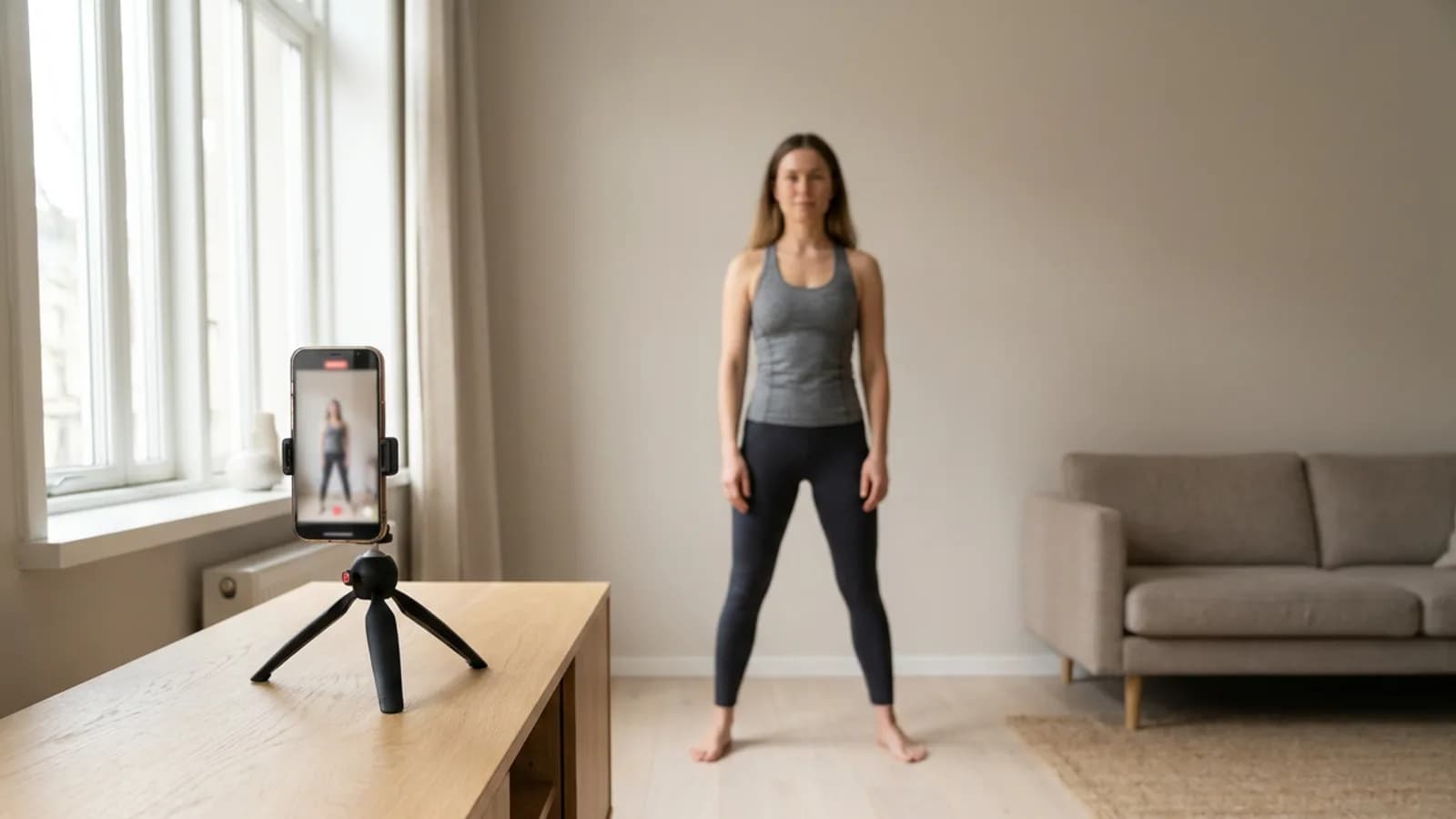
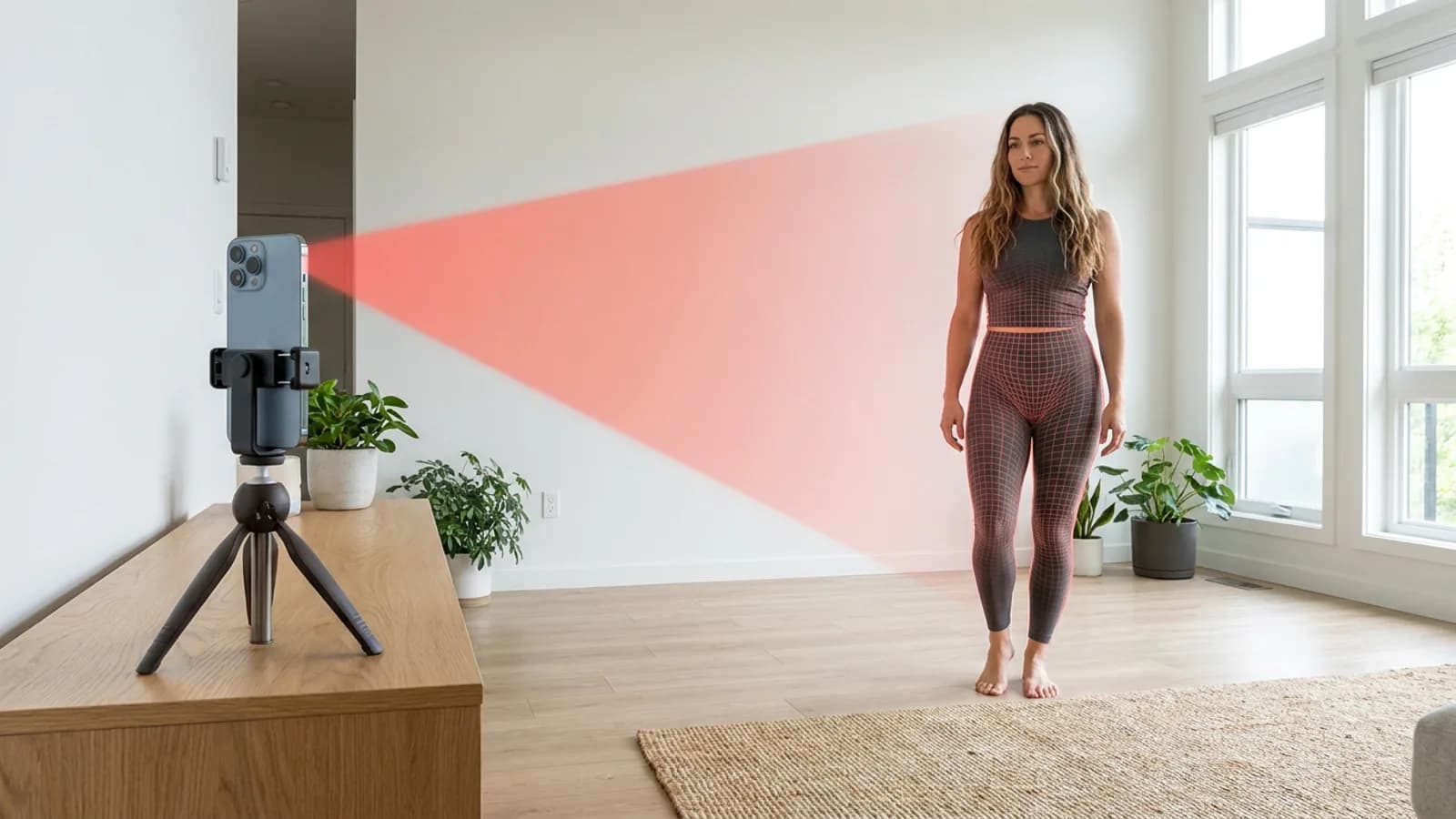
Stand against a plain wall in close-fitting clothes and follow the on-screen guide. Front and side are the minimum, because depth cannot be read from a single view. You can add back, left, right and arms-open frames — up to ten in one set — and each extra view sharpens the read.
- 03 · Check
Every frame is judged before it is measured
Framing, posture, blur and lighting are checked the moment you shoot. A frame that cannot carry a measurement is sent back to you to retake, not quietly averaged into the result. Bad evidence is rejected, never smoothed over.
- 04 · Read
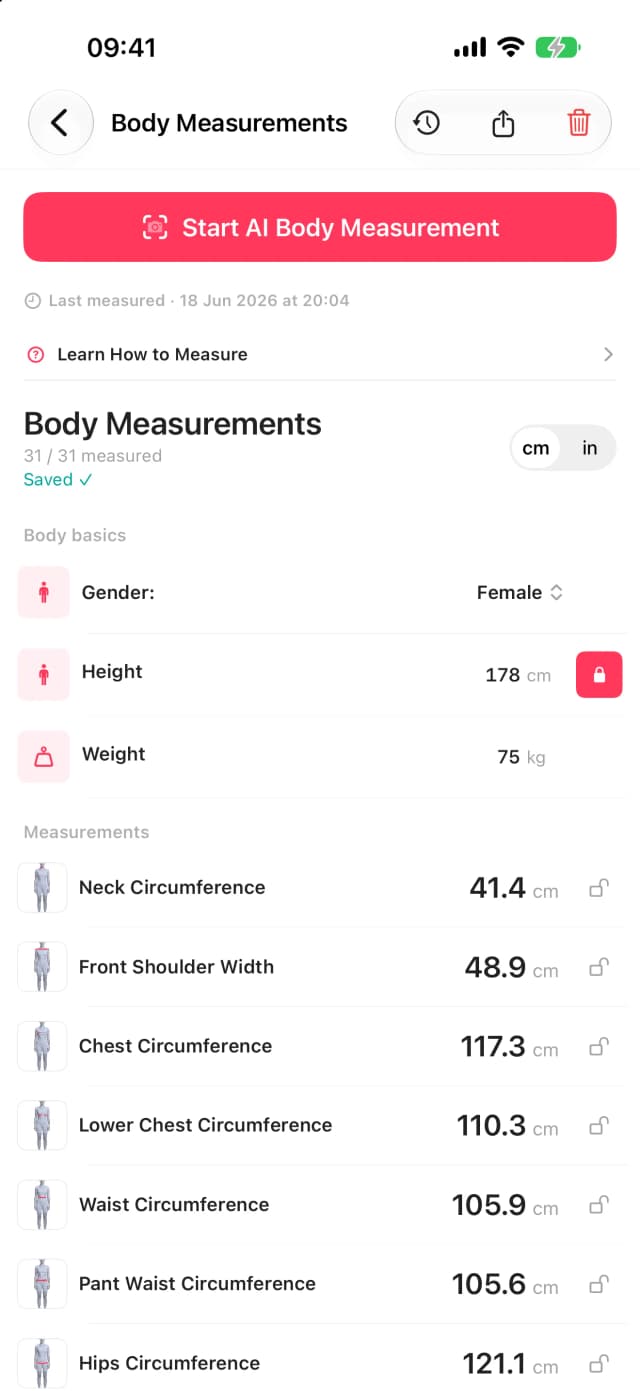
32 measurements, each with its own confidence
The set comes back grouped head to toe, every value carrying its own confidence. Review them, correct anything you already know, and lock the ones you trust so nothing can overwrite them later.
What a measurement session actually looks like
No studio, no scanner booth, no appointment — a phone propped on a table in your own room, and a few minutes of standing still.
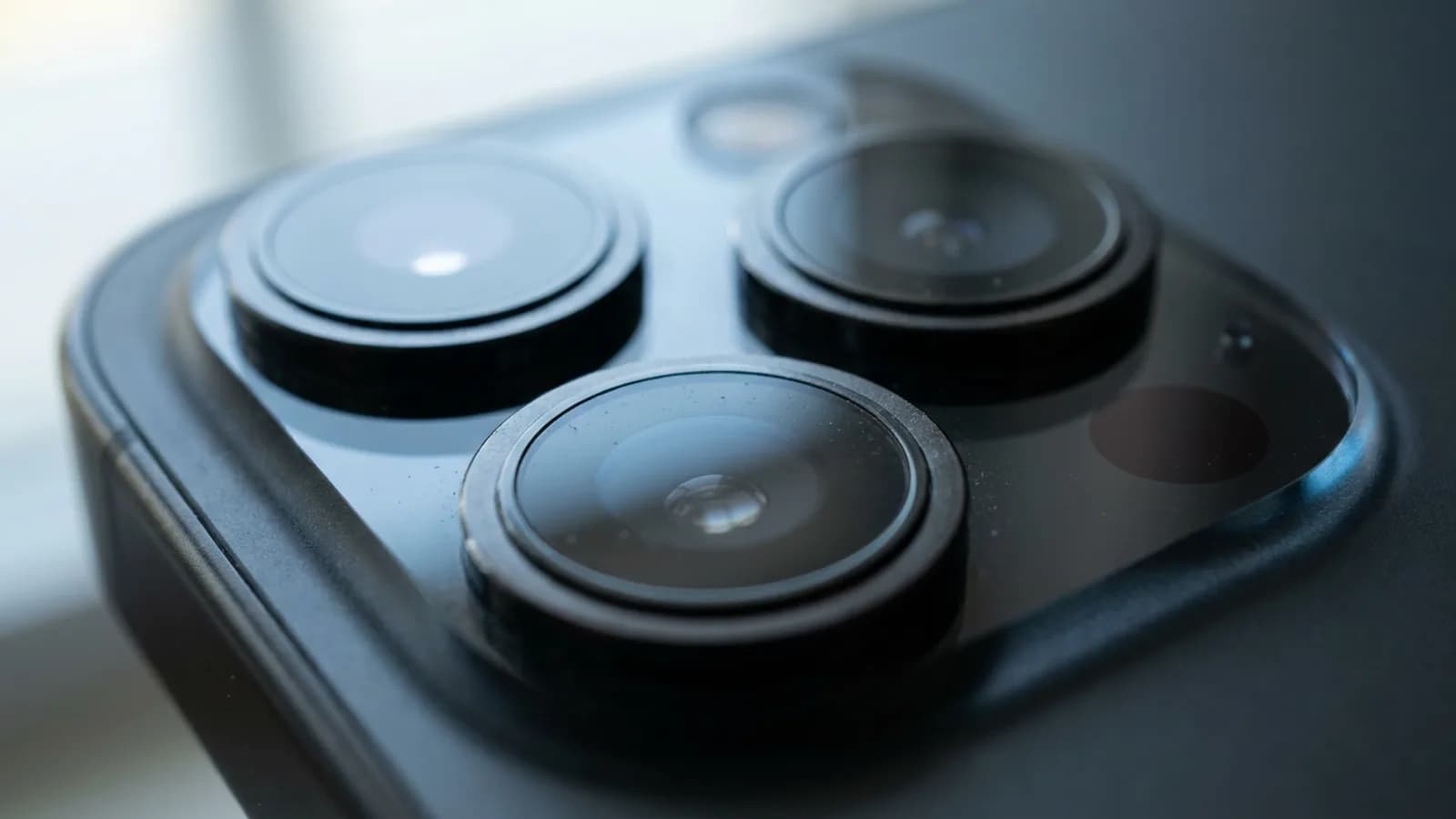

Do you need a LiDAR iPhone?
No — every one of the 32 measurements can be read from an ordinary iPhone camera. What a LiDAR iPhone adds is a second kind of evidence: the Pro models can sense how far away each part of you is, so the depth a flat photograph can only imply is measured instead. When your device has it, we use it. When it does not, the session runs exactly the same way.
- Depth, sensed rather than inferred
- On a LiDAR iPhone the distance to your body is measured directly instead of being estimated from a flat image.
- Used only when it is reliable
- Depth that arrives weak or unusable is treated as weak evidence, not quietly folded into your measurements.
- Never a requirement
- An older iPhone, or a Pro held at an awkward angle, still produces the full set of 32.
LiDAR is an advantage, not a requirement. Every one of the 32 measurements can be read from an ordinary iPhone camera — depth simply gives the engine one more independent witness when your device has it.
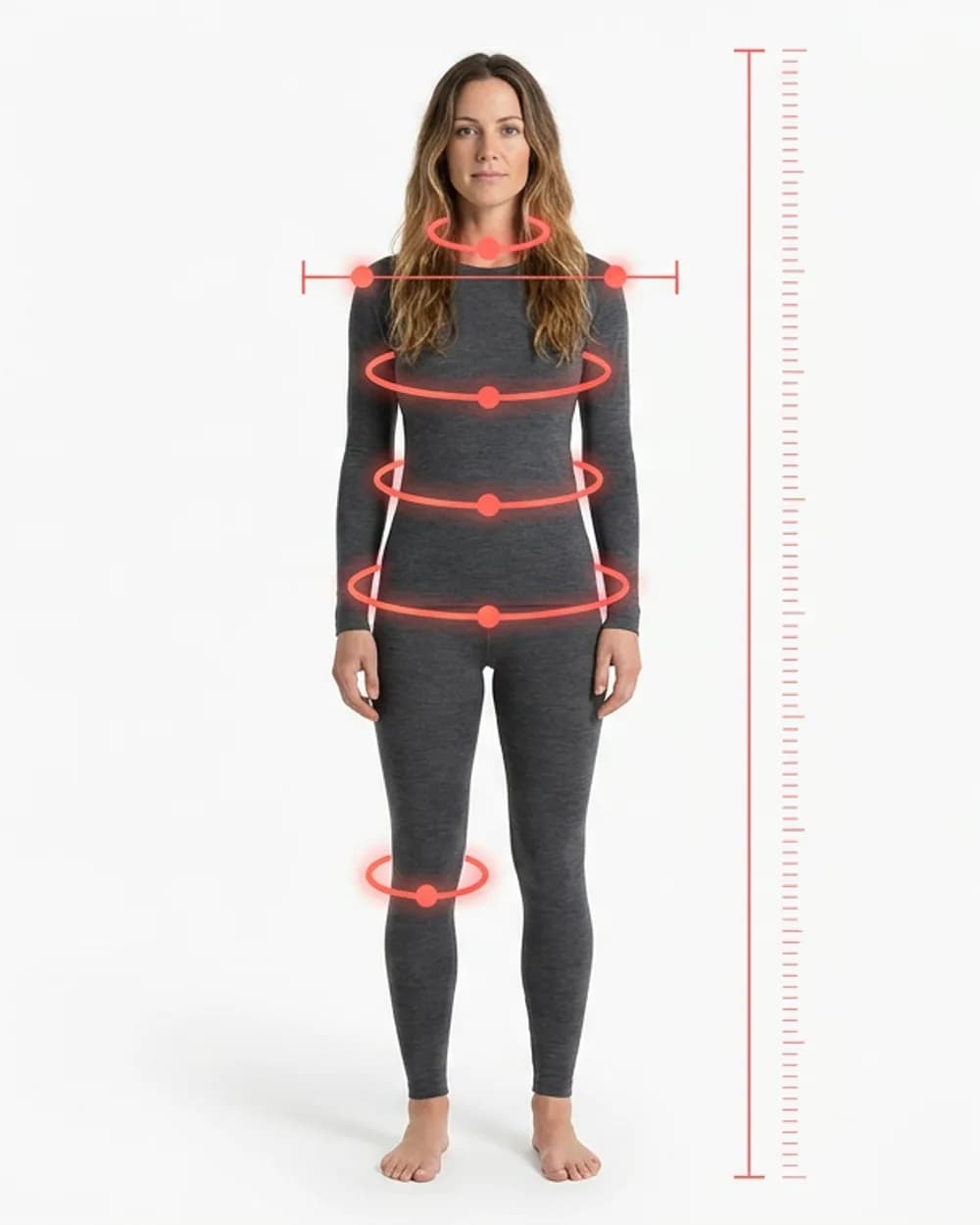
The 32 body measurements, head to toe
Twelve are the core measurements a tailor takes by hand. The other twenty are the derived heights and widths that drafting actually needs — the ones a person with a tape rarely has the patience to take.
Neck & shoulders
3- Neck circumference
- Neck to ground
- Front shoulder width
Chest
11- Upper chest (high bust) circumference
- Chest circumference
- Lower chest circumference
- Chest width
- Chest to waist
- Chest to hips
- Chest to ankle
- Chest to ground
- Underarm width
- Underarm to hips
- Underarm to ground
Waist
6- Waist circumference
- Trouser waist circumference
- Waist width
- Waist to hips
- Waist to ankle
- Waist to ground
Hips
4- Hips circumference
- Hips width
- Hips to ankle
- Hips to ground
Body lengths
2- Upper body length
- Lower body length
Arms
2- Arm length
- Wrist circumference
Legs
4- Knee circumference
- Knee width
- Knee to ground
- Ankle to ground
32 — Circumferences are closed tours around the body. Widths are frontal projections. Heights are vertical distances against the ground plane. They are never interchangeable, and treating them as if they were is the single most common way a measurement set goes wrong.
A measurement you cannot trust is worse than no measurement.
A garment gets cut to these numbers, so the work that matters is not producing them — it is knowing which ones to stand behind.
Checked before it reaches you
No measurement is published on a single reading. Each one is verified independently before it appears in your set.
Told when we are unsure
A measurement the system cannot pin down is flagged for you rather than quietly presented as certain. You always know which numbers are solid.
Confidence, per measurement
Not one score for the session — each of the 32 values carries its own, because a shoulder read from a clean front view is not as certain as a hip measured through a coat.
Discarded, never guessed
When a reading fails its checks it is thrown away and you are asked to retake, not handed a plausible-looking number that no garment should be cut to.
Ask ten tailors where the chest is measured and you get ten answers.
Every one of the 32 measurements has a single written definition behind it — the landmarks it runs between, the path it follows, and what it drives in the pattern. Your on-screen guide and the tailor who cuts your cloth work from that same definition, which is why a measurement taken in your bedroom means the same thing in a workshop three countries away.
- Girths, widths and lengths are distinct kinds and are never treated as interchangeable
- The same definition drives your guide, your set and the tailor’s pattern
- Your set travels in centimetres or inches, whichever you prefer
Measurement photographs are the most personal thing you can hand an app. We treat them that way.
- Private storage, never a public URL
- Photographs are uploaded straight to private storage. They are never served from a public address and never appear in a catalogue, a share link, or a preview.
- Deleted when the read ends
- Once the engine has finished, the source photographs are removed. A cancelled or failed read is cleaned up the same way — nothing is left behind because a session did not complete.
- The numbers are yours to correct
- Every value can be edited and locked by hand. A locked measurement is never overwritten by a later read, so a number you know to be right stays right.
- Erasable, completely
- Delete a measurement set, or your whole account, and the stored body data goes with it. Family-member profiles you created are erased on the same terms.
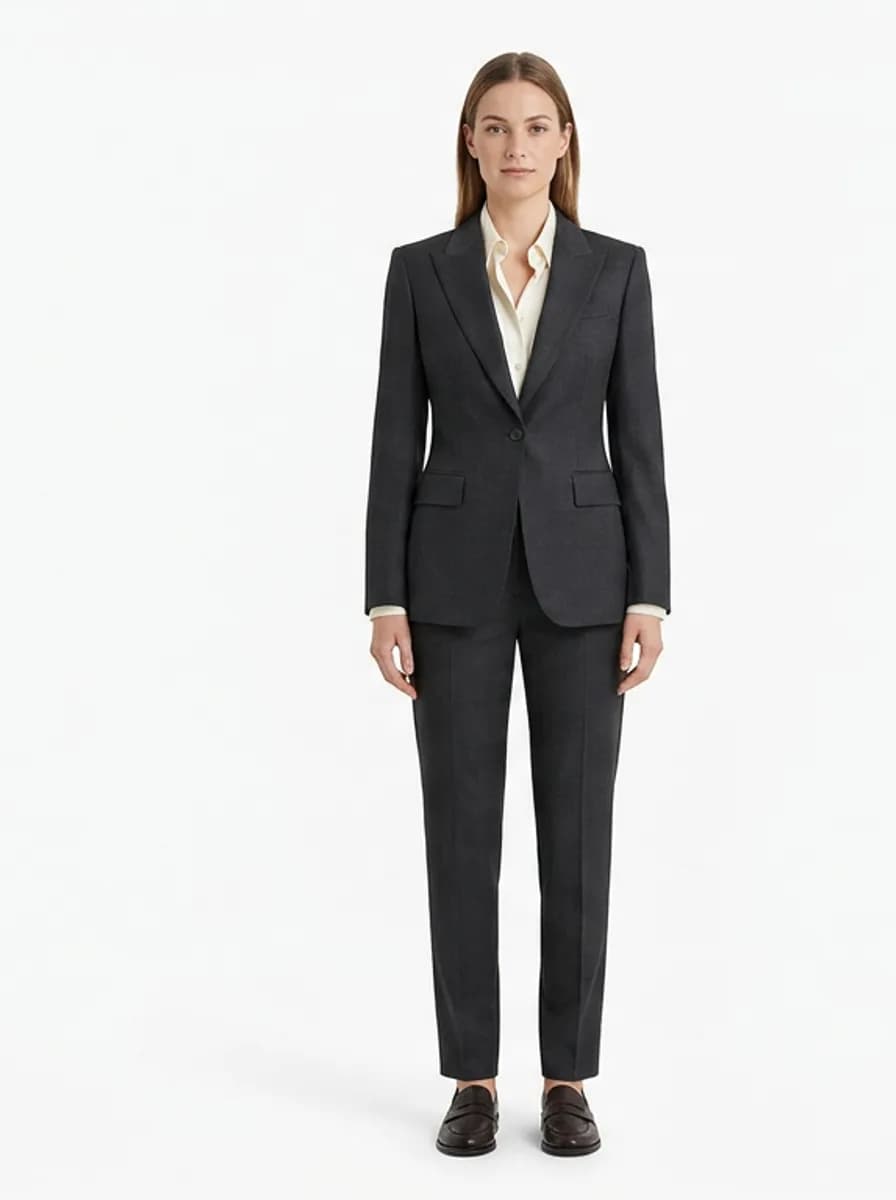
A measurement set is only worth something if a tailor can cut to it.
Your locked set travels with the order. The tailor receives the same 32 values you reviewed, in their own units, with your notes attached — instead of a dress size and a hope. That is the difference between made-to-measure and buying off the peg: nothing is graded to a size chart, and nothing is altered afterwards to cover a bad guess. Keep a set for yourself and one for each family member, compare a new reading against an old one, and see what has changed before you order again.
- One sizing profile per person, including family members you order for
- Centimetres or inches, your choice, everywhere it is shown
- Full history, so this month’s measurements can be compared with last year’s
- Exportable as a document you can take to any tailor, dressmaker or alterations shop
Body measurement questions, before your first scan
- Do I need an iPhone with LiDAR?
- No. Any iPhone camera produces the full set of 32 measurements. A LiDAR iPhone can sense how far away each part of you is, which gives the read a second kind of evidence — useful when your device has it, never required.
- How many photographs do I have to take?
- Two at minimum — a front view and a side view — because depth cannot be recovered from a single angle. You can add back, left, right and arms-open frames up to ten in one set, and more views generally means a tighter read.
- What should I wear?
- Close-fitting clothing, shoes off, hair clear of your shoulders, standing naturally against a plain wall with the floor visible. Loose layers hide the body's real outline and are the most common reason a set comes back with low confidence.
- How accurate is it?
- Accurate enough for a tailor to cut to, and honest about the rest: no measurement is published on a single reading, each one carries its own confidence, and anything the system cannot pin down is flagged instead of presented as certain. You can correct any value by hand and lock it so nothing overwrites it.
- What happens to my photographs?
- They go to private storage, are used for the read, and are deleted when it ends. Cancelled and failed reads are cleaned up the same way. They are never public, never shared with tailors, and never used as catalogue imagery.
- Can I measure someone else?
- Yes. Family-member profiles each carry their own measurement set and their own history, so you can order for a partner, a parent or a child without overwriting your own numbers.
- Can I measure myself at home without help?
- That is the whole point of it. Taking your own measurements with a tape means reaching around your own back and reading a number upside down, which is where most self-measuring goes wrong. Here you stand still and the phone does the reading, so no second person and no tape are involved.
- Is this a 3D body scan?
- No, and it does not need to be. A 3D body scanner is a fixed installation in a studio or a store. This is a phone on a table in your own room, and what comes out of it is the same thing a tailor writes on a measurement card: 32 numbers.
- How does this relate to my usual size?
- It replaces it. A size chart sorts millions of different bodies into half a dozen boxes, and a UK 12 is not a US 12 or an EU 40. A measurement set describes your body rather than the nearest box, so a bespoke shirt, a made-to-measure suit or an occasion dress can be cut to you instead of graded to an average.
Your next garment can be cut to you, not to a size chart.
Take two photographs tonight and carry your measurements with you from then on.