
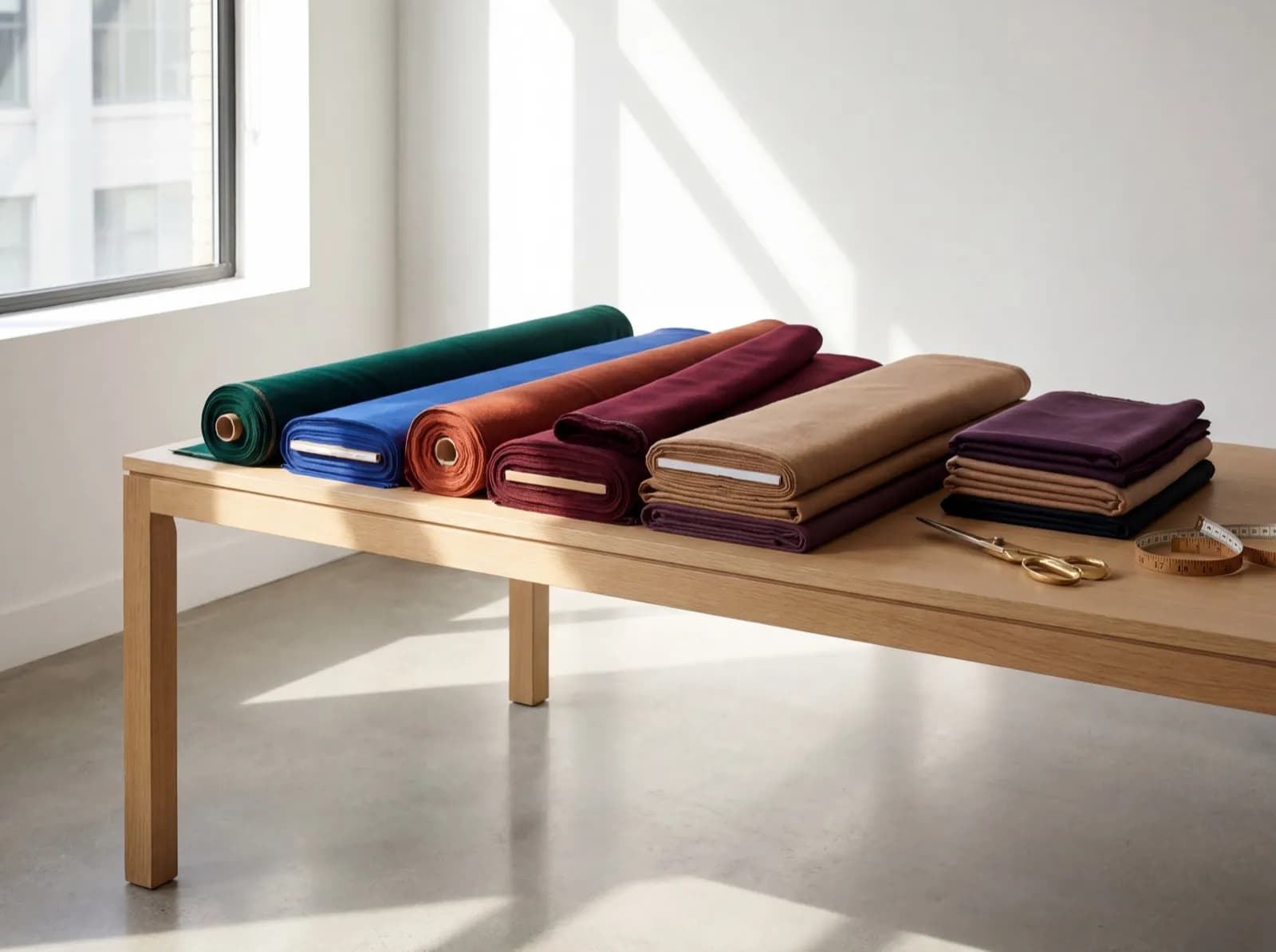
Buy the cloth. Not the garment.
The same wool, linen, silk, cotton and denim master tailors cut from — sold by the metre by the store that holds the roll, whether you are making a dress, a shirt, a jacket or a pair of curtains for yourself.
Explore fabric
For the people who already know what they want to make.
Home sewers, students, designers cutting a sample, and anyone with a tailor of their own. Cloth that is usually sold in trade quantities behind a showroom door, listed openly — the suiting for a jacket, the silk for an evening dress, the denim for a pair of jeans — and cut to the length you ask for.
From roll to doorstep
Every cut is sold by the store that owns the roll, with the stock it actually has.
- 01 · Browse
Search the cloth, not the catalogue number
Filter by material, weight, colour, weave and season. Open any fabric to see its composition, its mill or brand, and where it comes from.
- 02 · Measure
Order the length you need
Cloth is priced per metre. Each fabric shows the shortest length it can be cut in and how much is left on the roll, so you know two and a half metres of that navy wool is really there before you order it.
- 03 · Checkout
Pay securely, in your currency
Pay securely in your own currency, with the exchange rate locked when you order. Your length is set aside for you the moment the order goes through, so nobody else can buy the metres you just paid for.
- 04 · Receive
Cut and shipped to you
The store cuts the length, dispatches it, and you follow the order to your door. Each fabric shows the countries its store ships it to.
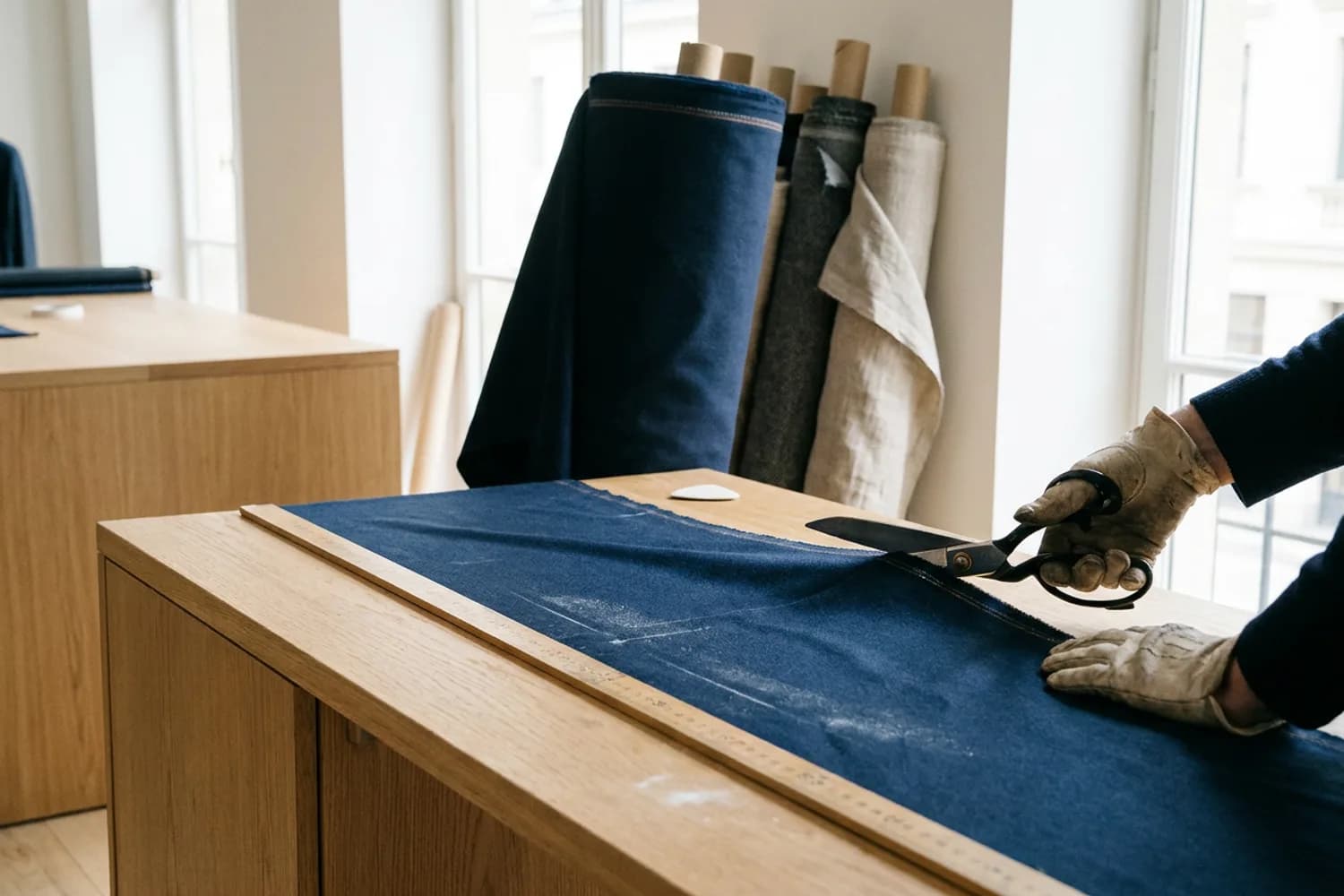
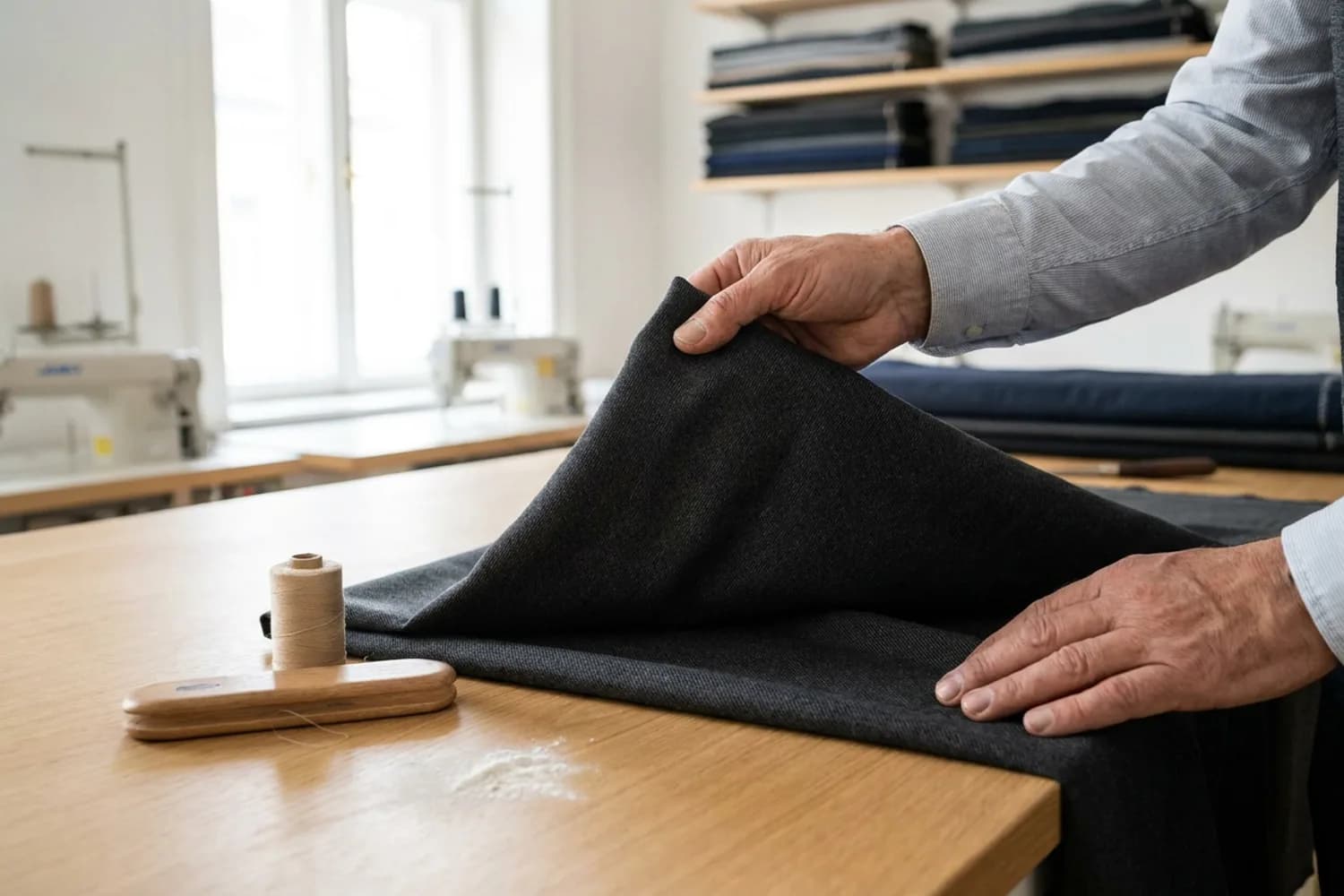
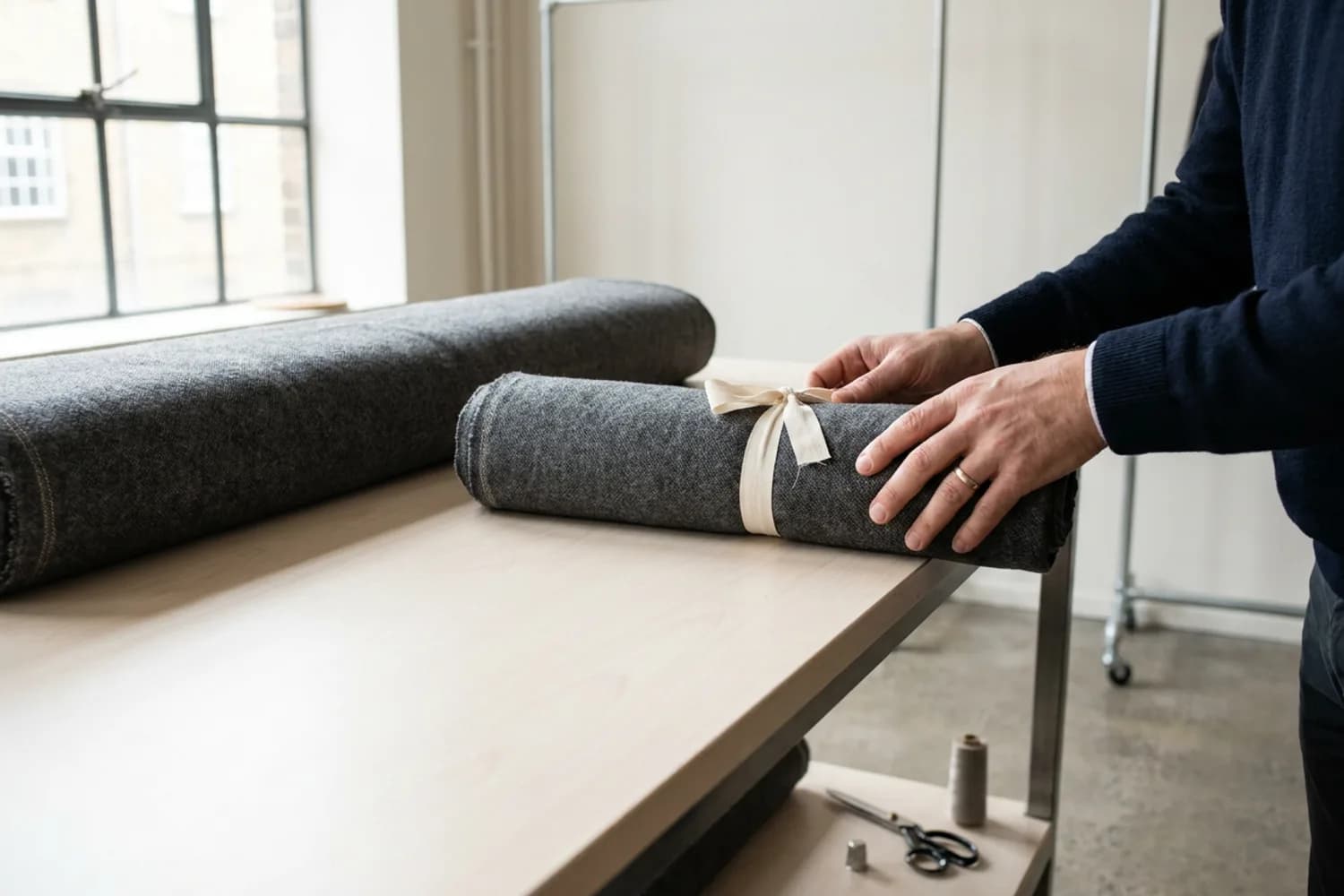
What a metre of good cloth actually looks like
The numbers a tailor would ask for
Cloth behaves differently depending on how it is built. Suiting, shirting, coating, lining and dress fabrics each carry the details that decide whether they suit what you are making.
Weight
Grams per square metre — the difference between a summer suit and a winter coat.
Width
The usable width in centimetres, which decides how many metres your pattern needs.
Composition
What it is made of, by percentage, down to the blend.
Thread count
The fineness of the weave, where the mill publishes it.
Stretch and shrinkage
How much it gives, and how much it will move in the first wash.
Thickness
Millimetres of cloth — how it will drape, press and sit in a seam.
Origin
The country the cloth comes from, alongside the mill or brand behind it.
Colour and pattern
The colour palette on the roll and the weave or finish it was given.
Buy the material on its own, or with a tailor attached
Buy it and sew it yourself
Order the cut, take delivery, and make the dress, shirt or coat you had in mind. Nothing else is required.
Pair it with a garment
Choose a fabric while ordering a made-to-measure piece and the tailor cuts your suit or dress from it. Some cloth is listed for this only, and says so.
Send it to your own tailor
Have the length delivered to you and take it to the seamstress or tailor you already trust. The cloth is yours once it ships.
Fabric questions
- Is there a minimum order?
- Every fabric shows the shortest length it can be cut in — that is the smallest amount you can order, and it is on the listing before you add anything to your basket. A metre of shirting and a metre of heavy coating are not cut the same way, so it is set per cloth rather than site-wide.
- Who actually sells and ships the fabric?
- The store that holds the roll. Fabric on TerzyApp belongs to a tailor store's own catalogue, often carrying a named mill or fabric brand, and that store cuts and dispatches your order.
- Can I order a sample first?
- Ask the store in chat. Listings carry photographs, composition, weight, width and origin precisely because cloth is bought at a distance, but a tailor store can tell you what it can send.
- Can I buy any fabric on its own?
- Not all of it. Some cloth is sold by the metre to anyone, and some is kept for the garments a tailor makes — a mill may allow one and not the other. Every fabric says which before you add it to your basket.
- How much fabric do I need?
- It depends on the pattern, your size and the width of the cloth — which is why width is on every listing. A shirt takes little; a lined winter coat takes several metres. If you are unsure, ask the store, or order the garment made to measure and let the tailor work it out.
- Where does the fabric ship to?
- That depends on the store holding the roll: many ship internationally, some deliver only within their own country. Each fabric shows where it can go before you order.
More on cloth, mills and what to make with it
How to Order Custom-Made Clothes Online with AI: Measurements, Virtual Try-On, Fabrics and Delivery
A practical guide to ordering custom-made clothing online: photo-based body measurement, virtual try-on, tailor selection, fabric buying, alterations and international shipping.
Read the storyTerzyApp iOS App Features: AI Measurement and Try-On
Inside the TerzyApp iOS app: AI body measurement from 2 photos, virtual try-on, made-to-measure ordering, and tools for tailors and fabric brands.
Read the storySS26 Tailoring: The Art of Deliberate Ease
Discover the Spring/Summer 2026 tailoring trends. Embrace deliberate ease with breathable linens, high-twist wools, and perfectly proportioned silhouettes.
Read the story
Start with the cloth.
Browse fabric by the metre, or have a tailor cut it into something made for you.