
How to Take Body Measurements for Custom Clothing at Home
A practical guide to measuring your body for custom clothing: prepare your tape, find the right landmarks and avoid confusing body measurements with garment sizes.
TerzyApp
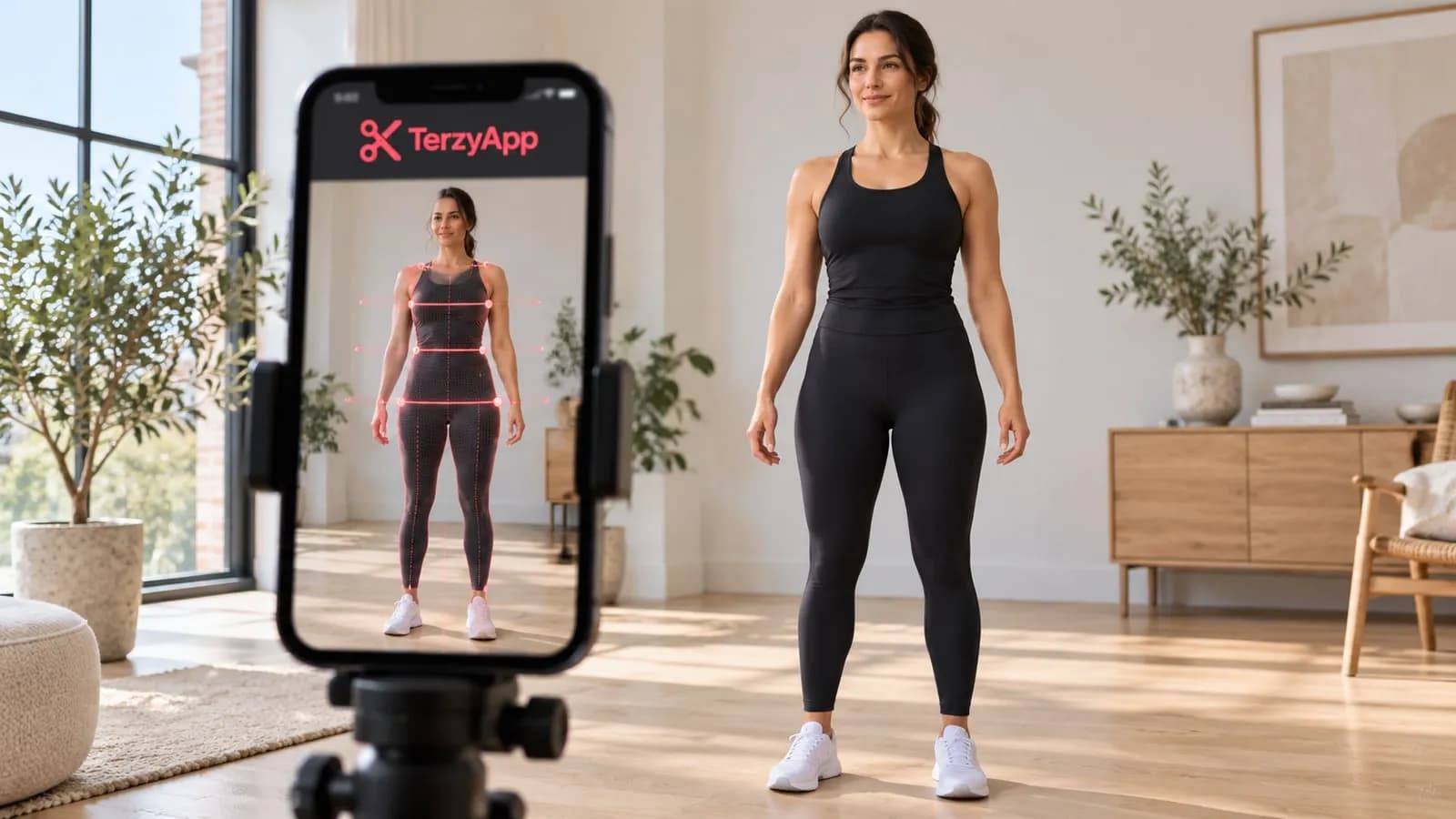
Learning how to take body measurements at home helps you prepare for custom clothing with clearer information. A chest measurement, waist measurement or sleeve length is useful only when the tape follows the correct landmarks. This guide explains how to measure yourself for clothing, what to record and when to ask your tailor for help.
Use a flexible dressmaker’s tape, wear lightweight clothing and stand naturally. Keep the tape flat and comfortably against your body without compressing it. Record the unit beside every measurement and follow your chosen tailor’s instructions whenever their method differs from a general guide.
What You Need to Take Body Measurements at Home
Prepare a flexible measuring tape, a mirror, a way to record your results and, ideally, someone to help. Check that the tape has not stretched and that you are reading from the zero mark. A rigid DIY tape is unsuitable for body circumferences.
Wear close-fitting, lightweight clothing. For a fitted dress or top, wear the underwear you expect to use with the finished garment where practical. Remove bulky layers. Stand in your usual posture, relax your shoulders and breathe normally; do not pull in your stomach or lift your chest.
Choose centimetres or inches according to the tailor’s form. Keep the unit consistent. If conversion is required, one inch equals 2.54 centimetres; retain the original value and avoid repeated rounding.
How to Measure Yourself for Clothing
Different garments need different measurements. A shirt, dress, jacket and pair of trousers do not share one universal checklist. Treat the following as common starting points and use the illustrated guide supplied for your actual order.
How to Measure Your Chest or Bust
Pass the tape around the fullest part of your chest or bust, under your arms and across your back. Check in the mirror that it stays level. Lower your arms, relax and read while breathing normally. The tape should touch your body without digging in or hanging loose. A helper makes it easier to keep the back of the tape in position.
How to Measure Your Waist
Find the natural waist around the crease that forms when you bend gently to one side, then stand upright again. Wrap the tape around that level without tightening it. A piece of soft elastic can help you keep track of the position.
Your natural waist is not necessarily where your trousers sit. If the form asks for a trouser waist or waistband circumference, measure at the requested wearing position instead. Label the two separately; a jeans size is not a substitute for a measured waist.
How to Measure Your Hips or Seat
Stand with your feet together and measure around the fullest part of your hips and seat. Check the tape from the side and back so it does not ride up. Keep it level without compressing your clothing. Move it slightly up and down to locate the fullest circumference, then record that position according to the tailor’s guide.
How to Measure Shoulder Width
Ask a helper to identify the shoulder points shown in your tailor’s guide and measure across your back between them. Do not guess a seam position or substitute the width of a jacket laid flat. Some methods follow a curve and others use different landmarks, so the requested method matters more than the measurement name alone.
How to Measure Sleeve Length
Check the starting point first. A guide may start at the shoulder point or at the centre back of the neck and continue over the shoulder. Keep your arm in the position illustrated and measure to the specified wrist or garment endpoint. Explain a preferred longer or shorter sleeve separately rather than changing an anatomical measurement.
How to Measure Your Inseam
Follow the tailor’s instructions for the crotch starting point and endpoint down the inside leg. A helper is useful, and the intended trouser style can affect the requested finished length. Mention your preferred hem and trouser break separately. If the guide asks for the inseam of existing trousers, use that garment method; it is not automatically interchangeable with a body measurement.
Neck, Thigh and Upper Arm Measurements
Measure these only where requested. Keep the tape at the landmarks shown and muscles relaxed unless the guide says otherwise. For a neck measurement, do not add a finger allowance automatically: some forms ask for the close body measurement and others specify an allowance. Record left and right separately when requested.
Body Measurements vs Garment Measurements
Body measurements describe your body. Garment measurements describe a finished item, often measured flat. A shirt’s flat chest width is not the same figure as the circumference around your chest, and simply doubling it does not establish how that shirt will fit you.
Finished clothing usually includes ease: room for movement and the intended silhouette. Fabric stretch, lining, construction and design affect the amount. Unless the tailor explicitly instructs otherwise, submit actual body measurements without adding your own comfort allowance. Describe close, regular or relaxed fit as a separate preference.
Common Body Measurement Mistakes
- Pulling too tightly: the tape should touch your body without compressing it.
- Measuring over bulky clothes: thick layers obscure the landmarks.
- Mixing waist positions: natural waist and trouser waistband can differ.
- Changing posture: holding your breath or tensing muscles changes the result.
- Mixing units: label every result and follow the form’s unit.
- Adding ease yourself: leave pattern allowances to the tailor unless instructed.
- Reusing unsuitable old measurements: remeasure when your body changes or the earlier method is unclear.
Check Your Measurements Before Ordering
Remove and reposition the tape, then take each measurement again. If the results differ, check the landmarks, posture and tape level rather than averaging inconsistent readings. Ask your tailor to clarify a method you cannot reproduce.
Before submitting, confirm every number has a clear name and unit, body and garment measurements are separated, the requested starting and ending points were used and fit preferences are recorded separately. Flag uncertain results before an order goes into production. Measurements support fit, but do not guarantee it: posture, pattern, fabric and construction matter too.
Using Your Measurements for Custom Clothing with TerzyApp
TerzyApp brings fabric discovery, garments and independent tailor stores into one marketplace. You can explore its AI-assisted body measurement experience through the body measurement guide. Follow the preparation and capture instructions for the method you use and check any uncertain results with your chosen tailor.
Then explore made-to-measure clothing and confirm which measurements the garment requires. Fabric may be included in a listing or chosen separately. Buying fabric by the metre alone does not require body measurements.
AI-assisted measurement is another way to support the process; it does not replace the tailor’s garment-specific requirements or promise a perfect fit. The cover image is a conceptual illustration, not a screenshot or a measurement instruction.
Frequently Asked Questions
Can I take body measurements by myself?
You can take some circumference measurements with a mirror. Shoulder width, sleeve length and other hard-to-reach measurements are easier with a helper. Follow the tailor’s guidance when assistance is required.
Should I measure in centimetres or inches?
Use the unit requested by the form. Keep it consistent and label each result. Do not enter an inch measurement in a centimetre field.
Should I add extra room to body measurements?
Only when the instructions explicitly ask for it. Otherwise, record the actual body measurement and explain your fit preference separately.
How many measurements do I need for custom clothing?
There is no universal number. The garment, design and tailor’s process determine the list. Complete the measurements requested for that particular order.
Do accurate measurements guarantee a perfect fit?
No. They help a tailor understand your proportions, but fit also depends on posture, fabric, pattern, construction and preferences. Check the fitting, alteration and support arrangements before ordering.
Comments
Loading comments…


